
MICROSCOPIC SPINE SURGERY
Advanced precision spine surgery using high-magnification technology for safe and effective nerve decompression.
Focused surgical care designed to relieve pain, protect spinal structures, and promote faster recovery.
Book an Appointment
Book an appointment with Dr. Raju Munde for expert Orthopedic Treatments & Consultation
1️⃣ What is Microscopic Spine Surgery?
Microscopic Spine Surgery is a minimally invasive spinal procedure performed using a high-powered surgical microscope. The magnification allows the surgeon to clearly visualize nerves, discs, and surrounding tissues, ensuring accurate removal of the problem area while minimizing damage to healthy structures.
It is commonly used to treat herniated discs, spinal stenosis, and nerve compression with improved precision and safety.
It is commonly used to treat herniated discs, spinal stenosis, and nerve compression with improved precision and safety.
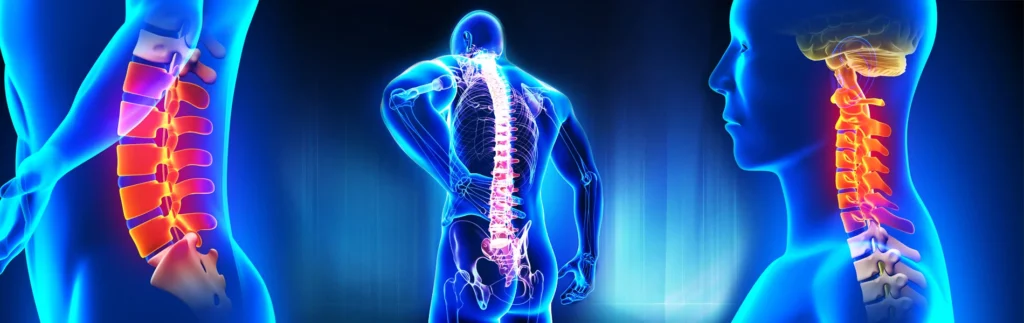
2️⃣ Conditions Treated
Herniated (Slipped) Disc
• Persistent back or neck pain
• Radiating arm or leg pain
• Numbness or tingling
• Radiating arm or leg pain
• Numbness or tingling
Spinal Stenosis
• Difficulty walking
• Leg heaviness
• Lower back discomfort
• Leg heaviness
• Lower back discomfort
Nerve Root Compression
• Shooting pain
• Muscle weakness
• Reduced mobility
• Muscle weakness
• Reduced mobility
Degenerative Spine Conditions
• Chronic back pain
• Disc degeneration
• Limited spinal movement
• Disc degeneration
• Limited spinal movement
3️⃣ What is the Treatment Process?
Microscopic spine surgery may involve:
• Small Targeted Incision – Minimal exposure of affected area
• Microscope-Guided Precision – Enhanced visibility of nerves and discs
• Decompression – Removal of disc fragment or bone pressing on nerves
• Tissue Preservation – Protecting muscles and ligaments
• Early Mobilization – Faster post-operative recovery
4️⃣ Our Approach
Detailed Clinical Evaluation
Comprehensive assessment with imaging for accurate diagnosis.
Precision-Based Surgery
High magnification ensures safer and more controlled procedures.
Reduced Post-Operative Pain
Smaller incision and minimal tissue disruption.
Focus on Long-Term Function
Restoring mobility and preventing recurrence through structured follow-up care.